

Why Hidden Fasteners Matter for Premium Ipe Decking
A pristine hardwood deck tells a story through its wood grain, color depth, and natural character. Hidden fastener systems preserve that aesthetic by keeping fasteners completely concealed beneath the deck surface, creating seamless lines that let the material speak for itself. For architects designing modern contemporary homes that emphasize warm wood tones and natural beauty, this detail matters profoundly.
When fasteners remain visible, they interrupt the visual flow and create maintenance concerns. Surface-mounted screws and bolts accumulate dirt, corrode over time, and require ongoing attention. Hidden fastening systems eliminate these eyesores while providing structural integrity that lasts decades. We’ve seen projects where architects specify Ipe decking specifically because they know hidden fasteners will showcase the wood’s rich chocolate and amber tones without visual interruption.
Beyond aesthetics, hidden fasteners distribute load more evenly across the deck structure, reducing stress concentrations that can lead to premature failure. This engineering advantage translates to longer deck life and fewer warranty callbacks.
Action item: Before your next hardwood deck project, assess whether your current fastening approach supports your design vision or compromises it.
The Challenge of Fastening Dense Hardwoods
Ipe, Cumaru, and other tropical hardwoods test fastening systems like no other material. These species carry density ratings between 50 and 65 pounds per cubic foot, making them harder than many softwoods by a factor of three or more. Standard fasteners designed for pressure-treated lumber simply don’t perform when faced with this density.
The primary challenge: pre-drilling becomes mandatory rather than optional. Without proper hole preparation, fasteners can bend, snap, or create radial checking (splitting) around the attachment point. We’ve encountered installations where crews underestimated this requirement, resulting in splintered decking and compromised connections. The hardness also means ordinary fastening systems designed for composite materials won’t hold reliably.
Thermal expansion presents a secondary complication. Dense hardwoods move less than softwoods but still shift with humidity cycles. A fastening system that doesn’t accommodate this movement will create stress points that eventually crack the wood or loosen connections.
Temperature fluctuations in Texas, particularly in Hill Country and Lake Travis regions where architects design luxury custom homes, amplify these movement patterns. Hidden fastener systems must be engineered specifically for these material properties.
Action item: Any dense hardwood deck requires fasteners rated for materials above 45 pounds per cubic foot. Don’t adapt softwood solutions.
How Our Hidden Fastener Selection Solves Installation Problems
We’ve built our decking hardware selection around these real-world challenges. Our hidden fastener systems include pre-engineered hole spacing, graduated fastener sizes, and material-specific recommendations that remove guesswork from installation.
Our stainless steel hidden fastener lines accommodate the full spectrum of hardwoods we supply: Ipe, Cumaru, Garapa, Massaranduba, and Tigerwood. Each system comes with detailed installation specs for pre-drill diameters, fastener torque limits, and spacing requirements tailored to wood density. This eliminates the trial-and-error approach that undermines project timelines and creates callbacks.
We pair fastener selection with realistic guidance on which systems work best for visible edges versus field installation, for deck boards versus fascia applications. Our approach acknowledges that a pristine undercarriage requires different solutions than exposed rim joists.
For architects specifying Ipe decking across Hill Country or Austin-area custom homes, we provide on-site consultation to ensure crews understand material behavior and fastening protocol before work begins. This proactive approach prevents installation delays and structural issues that damage your project reputation.
Stainless Steel Systems for Maximum Durability
Stainless steel fasteners represent the gold standard for hardwood deck applications, particularly in humid Texas environments where salt air near lakes and traditional corrosion vectors are less of a concern but moisture variability remains relentless. Grade 316 stainless steel offers superior resistance to corrosion while maintaining the strength required for dense wood species.
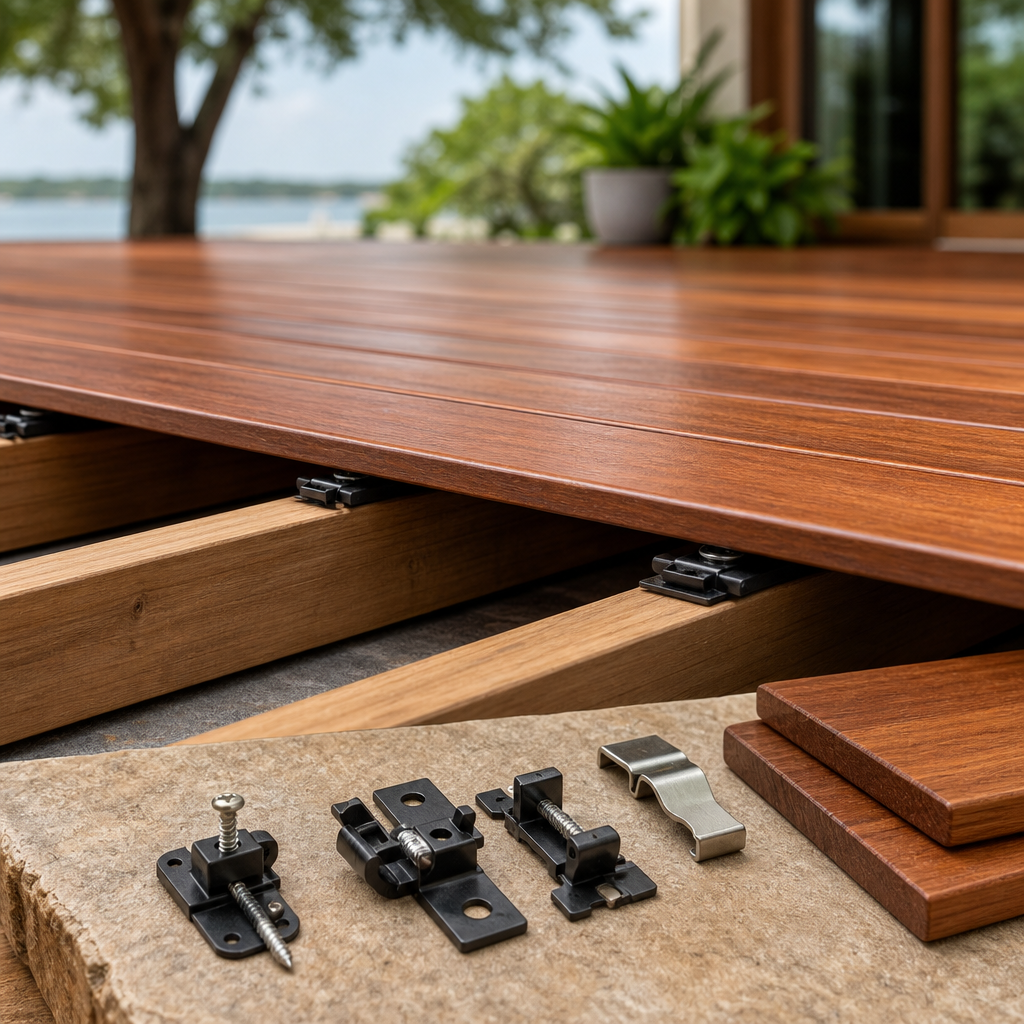
Our stainless steel hidden fastening systems feature screws engineered with specific thread designs that reduce torque requirements during installation while maximizing holding power. The fastener head sits flush with a cup or collar mechanism, completely concealing it beneath the deck board. Unlike traditional fasteners that rely on surface tension, our systems anchor deeply into substructure framing, distributing load across a wider area.
Stainless steel also matches the longevity expectations of premium hardwood decking. Ipe and Cumaru naturally last 25 to 30 years with proper installation. Fasteners must meet that durability threshold. We specify only fastener systems engineered to perform for the full lifespan of the decking material itself, not hardware that will corrode or fail in 10 to 15 years and require complete restoration.
For luxury custom home projects where architects design spaces meant to perform for decades, stainless steel fasteners align with material investment and owner expectations.
Composite-Compatible Fastening for Hybrid Decks
Modern architectural design increasingly blends materials. A deck might feature hardwood field boards paired with composite fascia, composite risers, or mixed-material aesthetic cladding. This hybrid approach demands fastening systems that perform reliably across both wood and synthetic substrates.
We stock composite decking options from leading manufacturers including TimberTech, Trex, and Fiberon, and we maintain hidden fastener inventory that coordinates seamlessly with these products. Composite fasteners differ from wood fasteners in several ways: they require different torque values, accommodate slightly different hole sizing, and sometimes use different fastener materials to prevent staining or electrolytic reactions with composite materials.
A hybrid deck designed by a contemporary architect might specify naturally weathered Ipe boards with composite hidden fascia trim and stainless steel fastening throughout. Our inventory includes fastener kits engineered specifically for these mixed-material applications, eliminating the frustration of sourcing compatible hardware from three different suppliers.
This unified approach simplifies installation, ensures performance consistency, and reduces the likelihood of material incompatibility issues that emerge months or years into a project.
Specialized Fasteners for Ipe and Cumaru
Ipe demands the most specification attention of any hardwood we supply. Its density and hardness characteristics are nearly unforgiving for conventional fastening approaches. We recommend fasteners specifically engineered for tropical hardwoods, with pilot hole diameters that account for the material’s minimal give and moderate fastener head geometries that reduce splitting risk.
Our Ipe fastener systems feature:
- Hardened stainless steel construction rated for material density above 60 pounds per cubic foot
- Graduated pre-drill hole diameters that taper from pilot hole to fastener shaft diameter
- Head designs that create positive mechanical advantage during installation, reducing fastener torque and installation time
- Fastener spacing recommendations that prevent radial checking and allow for thermal movement
Cumaru presents slightly different characteristics. Though similarly dense, Cumaru exhibits different grain structure and moisture behavior than Ipe. Our Cumaru fastening recommendations adjust spacing tolerances and fastener torque limits to reflect these material differences. This specificity prevents the situation where a fastening system engineered for Ipe performs inadequately when applied to Cumaru or vice versa.
We’ve developed these specialized recommendations through years of project experience across Austin, Dallas, Houston, and San Antonio. Your architect benefits from this accumulated knowledge rather than navigating installation challenges independently.
Installation Techniques and Best Practices
Hidden fastener installation demands precision that surface fastening doesn’t require. Hole position, depth, and diameter all influence holding power and long-term performance. Our installation guidance covers these details comprehensively.
Pre-drilling is non-negotiable for dense hardwoods. We recommend pilot holes that measure approximately 85 percent of the fastener diameter at the threaded shaft. This allows fasteners to bite firmly without splitting the wood. For Ipe, Cumaru, and similar species, use carbide-tipped drill bits that maintain sharpness through the hardness of the material.
Fastener torque matters more than installation speed. A fastener over-torqued into dense hardwood generates radial stress that eventually causes splitting, even if the crack isn’t immediately visible. We recommend torque specifications for each fastener type and provide handheld torque-limiting tools to crews unfamiliar with this requirement.
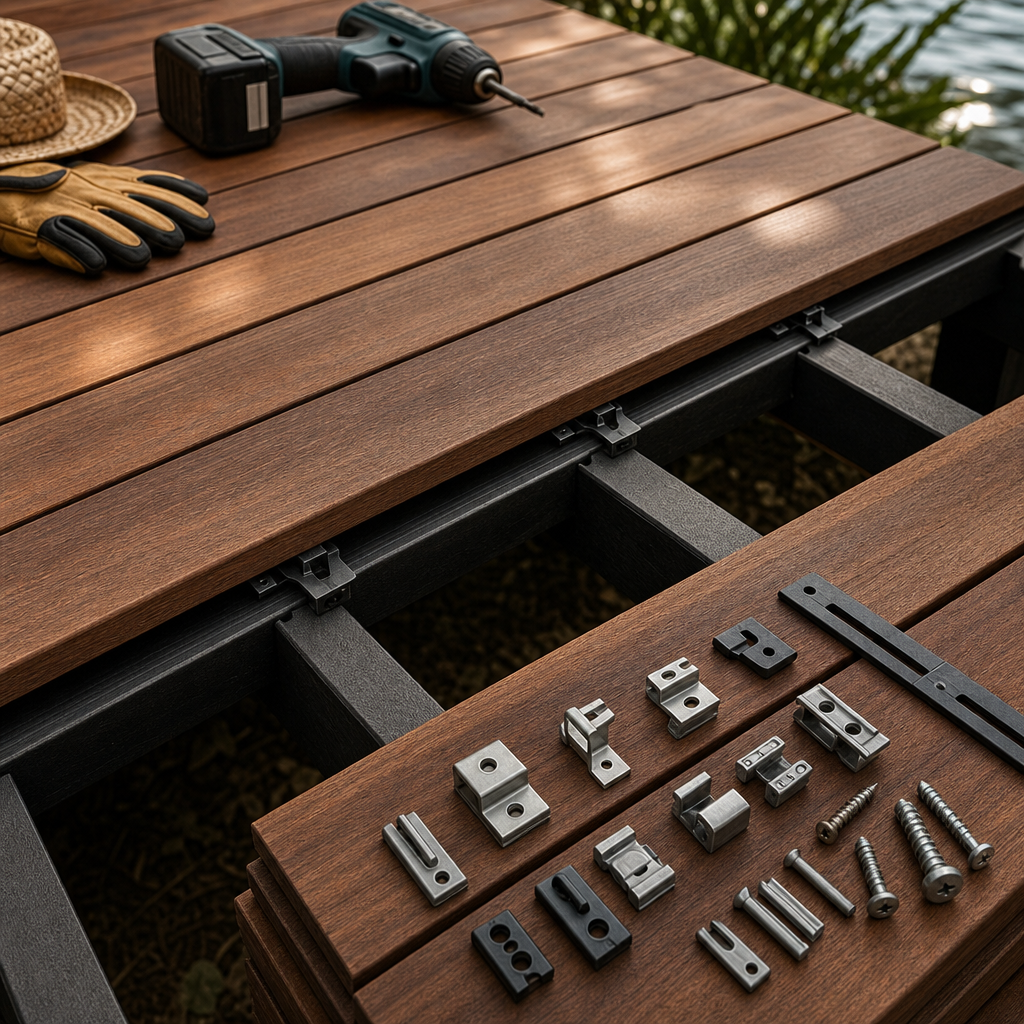
Spacing between fasteners should follow our material-specific guidelines rather than generic deck installation standards. Dense hardwoods can’t compensate for spacing errors through elastic deformation the way pressure-treated lumber does. Follow the specifications, and you’ll avoid field adjustments that add cost and delay completion.
Temperature during installation influences results. Hardwood decking moves less at extreme temperatures. Schedule Ipe or Cumaru installation during moderate weather when the material’s moisture content has stabilized.
Comparing System Performance and Longevity
Not all hidden fastener systems perform equally across dense hardwood applications. Some are engineered for composite materials and perform poorly in hardwood. Others use fastener materials that corrode faster than expected in humid environments. Comparing systems requires understanding their engineering specifications, not just their appearance.
We evaluate hidden fastener systems on four criteria: fastener material durability (typically 25 to 30 years minimum for premium hardwood applications), holding power under load (must accommodate thermal movement without loosening), installation reliability (how consistently field crews execute without special tools or training), and cost-effectiveness relative to performance.
Systems marketed for general deck use often underperform when installed into Ipe or Cumaru because their engineering doesn’t account for extreme density. The fastener might not generate sufficient bite to hold against the minimal flex that hardwood decking provides. Over three to five years, fastener loosening becomes apparent, creating movement and creaking that undermines the installation quality.
Our recommended systems prioritize durability and holding power over lowest purchase price. The cost difference between premium hidden fastener systems and budget alternatives is typically $200 to $400 per 500 square feet of decking. Spread across the life of the deck, this represents less than a few cents per square foot annually, a trivial investment when compared to the cost of re-fastening or replacing failed fasteners years later.
Selecting the Right System for Your Project Type
Project context determines fastener selection. A small residential deck in Austin’s Tarrytown neighborhood with modest hardwood budget might employ a different system than a luxury custom home in Horseshoe Bay featuring Ipe throughout with hidden fastening everywhere.
For residential hardwood decks under 800 square feet, our stainless steel hidden fastener systems designed specifically for tropical hardwoods represent the most cost-effective choice. Installation is straightforward, material requirements are modest, and long-term performance is exceptional.
For larger residential or light commercial applications, consider fastener systems that offer modular expansion, allowing crews to install additional sections without fastener compatibility concerns. This becomes important for properties where decking might extend over time or where portions of the deck face different environmental exposures.
Luxury custom homes and architect-specified projects typically benefit from our premium stainless steel systems with documented engineering specifications, clear installation protocols, and warranty support. These projects often involve complex geometries, multiple material types, or specific design requirements that demand fastener systems engineered for precision.
Discuss your specific project scope, decking material, environmental exposure, and aesthetic goals with our team. We’ll recommend the fastener system that aligns with your requirements rather than suggesting our highest-margin option.
Why Our Fastener Recommendations Deliver Superior Results
Our fastener expertise stems from three distinct advantages. First, we supply the hardwood materials themselves. We understand Ipe, Cumaru, Garapa, and other species at the material level: their density, grain structure, moisture behavior, and installation characteristics. This knowledge directly informs fastener recommendations that work reliably with the specific wood you’re using.
Second, we’ve installed thousands of hardwood decks across Texas, from Hill Country architectural projects to Houston-area residential applications. This field experience generates recommendations grounded in real-world performance rather than theoretical specifications. When we recommend a fastener system, we’ve seen it perform reliably across hundreds of installations in Texas climate conditions.
Third, we maintain inventory of multiple fastener system types and can provide alternatives if field conditions require adjustment. Architects and builders appreciate the flexibility to solve unforeseen installation challenges without delaying project timelines or sourcing from multiple suppliers.
When you select fastening systems through us, you’re drawing on curated expertise specifically aligned with the hardwood materials and Texas climate conditions your project faces.
Maintenance and Long-Term Durability Expectations
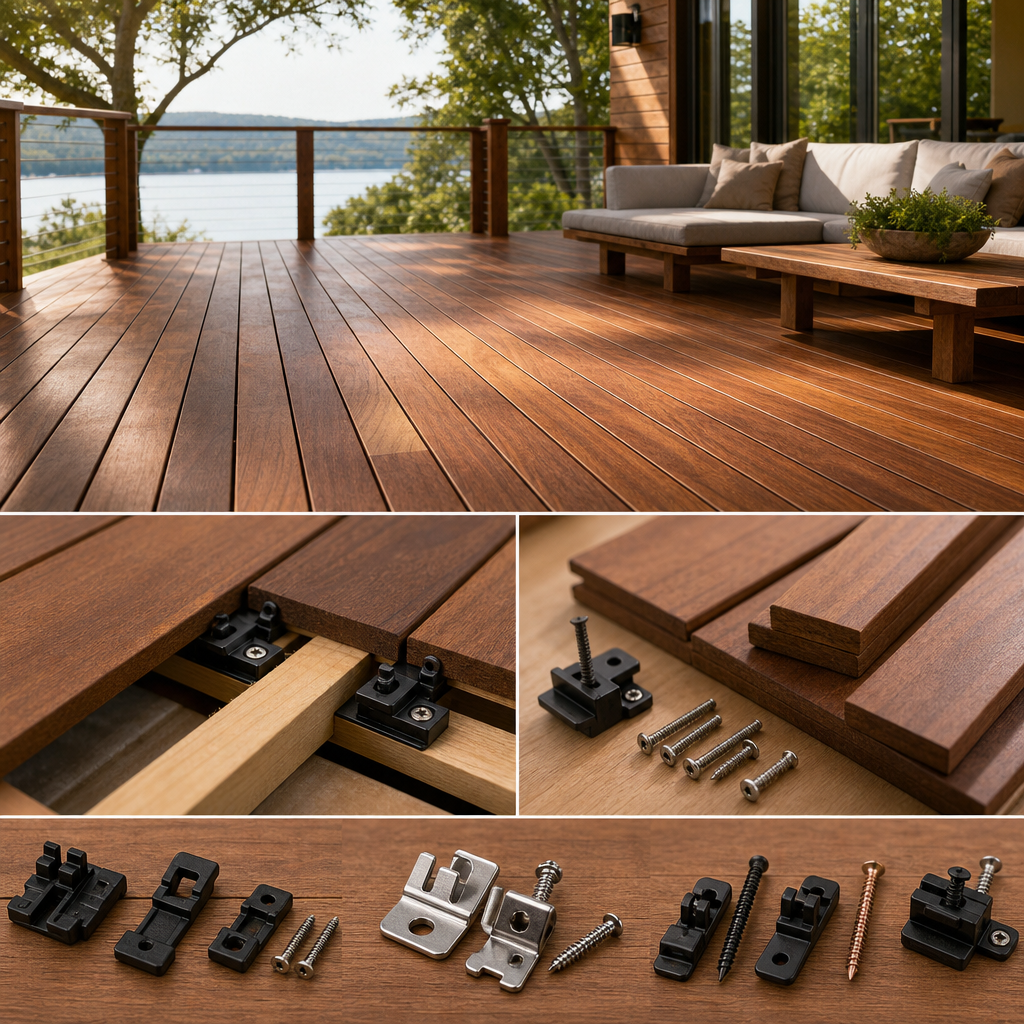
Hidden fastener systems require minimal maintenance compared to surface-mounted hardware. The primary advantage is precisely this: fasteners remain out of sight and out of weathering exposure, extending their functional life significantly.
Inspect your hardwood deck annually for signs of movement or fastener loosening. Listen for creaking or squeaking during use; these sounds often indicate fastener movement. Modern hidden fastener systems should remain completely tight throughout the life of the deck without re-tightening required.
Hardwood decking itself benefits from occasional cleaning and periodic natural oil treatments that maintain appearance and weather protection. Fasteners hidden beneath the surface don’t participate in this maintenance cycle, remaining corrosion-protected and secure indefinitely.
We recommend establishing a maintenance baseline shortly after installation. Have a deck professional inspect fastener tightness and document baseline conditions. Annual visual inspections thereafter typically reveal any issues emerging from movement or environmental stress. Addressing fastener concerns early prevents the cascade of problems that emerge when one fastener loosens and creates movement that stresses adjacent connections.
With proper material selection and professional installation, hidden fastener systems in premium hardwood decks outperform surface-mounted alternatives by a significant margin, often performing reliably for the full 25 to 30-year lifespan of the hardwood material itself.
Your Definitive Fastening Solution
Hidden fastener systems transform how premium hardwood decking performs and appears. The right system preserves the visual integrity of Ipe and Cumaru while providing structural performance that lasts decades. The wrong system leaves you with loosening fasteners, visible maintenance concerns, and eventual re-installation costs that dwarf the original fastener investment.
We’ve engineered our fastener recommendations specifically around the hardwood species we supply, the Texas climate conditions you face, and the architectural standards of contemporary design that emphasizes natural materials and long-term durability. Our stainless steel hidden fastener systems, specialized approaches for tropical hardwoods, and comprehensive installation guidance represent the definitive approach to hardwood deck fastening.
Don’t compromise your architectural vision by adapting generic fastening solutions to premium materials. Contact us to discuss your specific project requirements. We’ll recommend the hidden fastener system engineered to deliver the performance and aesthetics your hardwood deck deserves, backed by decades of installation experience across Texas and nationwide.
To place orders, order samples, or talk with a live person.
Frequently Asked Questions (FAQ)
Why do we recommend hidden fastener systems for Ipe and dense hardwood decking?
We recommend hidden fastener systems because dense hardwoods like Ipe and Cumaru are prone to splitting when traditional screws or nails are driven through them. Our hidden fastener solutions distribute stress more evenly across the board, preventing the radial checking that commonly occurs with exposed fastening methods. Additionally, hidden systems deliver the clean aesthetic our architect clients expect in premium custom projects while maintaining the structural integrity your deck requires for decades of performance.
What makes stainless steel fastening systems superior for our climate in Texas?
We specify stainless steel systems because Texas humidity and occasional coastal moisture exposure create conditions where standard hardware corrodes quickly and stains wood. Our stainless steel fastener selections resist oxidation and prevent the dark streaking that compromises the natural beauty of clear-grain cedar, Ipe, and other premium materials we stock. For the long-term durability architects demand in high-end residential work, stainless steel is the only choice we confidently recommend.
How do we help you select the right fastening system for your specific project?
We work directly with your project requirements, material selection, and installation timeline to match you with the fastener system that performs best. Whether you’re installing Ipe decking, combining hardwoods with composite materials, or working with thermally modified products, we provide the exact specifications and hardware our inventory supports. Our team ensures compatibility between your chosen boards and fastening method so your installation proceeds smoothly without delays or callbacks.


