

Why Douglas Fir Timbers Matter in Contemporary Design
Douglas fir has become the gold standard for exposed beam applications in modern architecture, and for good reason. Its strength-to-weight ratio outperforms most domestic softwoods, allowing architects to design larger clear spans without the visual bulk of heavier species. The wood’s warm, honey-to-amber tone naturally complements the light-filled, minimalist aesthetic that defines contemporary Texas design.
For projects emphasizing the boundary between indoors and outdoors, Douglas fir delivers visual warmth without competing with expansive glass or modern furnishings. The grain structure reads distinctly but not aggressively, creating that refined backdrop that Lake|Flato and similar firms use to ground their work. Unlike species that yellow or darken significantly over time, Douglas fir maintains its warm character with minimal color shift, preserving the architect’s original intent across decades.
Beyond aesthetics, Douglas fir’s proven performance in load-bearing applications gives architects confidence in structural integrity. Building codes recognize Douglas fir strength ratings, eliminating uncertainty when engineers specify beam dimensions and spacing.
What to do next: If you’re exploring exposed beam options for an upcoming project, request samples of both clear and vertical grain Douglas fir to evaluate color consistency and grain character in your specific lighting conditions.
The Challenge of Sourcing Quality Architectural Timber in Texas
Texas architects often face a frustrating gap between vision and reality when specifying exposed beams. Most commodity lumber suppliers stock construction-grade material designed for framing, not architectural visibility. Their inventory rotates quickly, meaning color consistency, grain selection, and dimensional precision become unpredictable.
Sourcing truly architectural-grade Douglas fir requires finding suppliers who understand the difference between “building it” and “building it beautifully.” Many out-of-state mills don’t grasp Texas climate demands. Timber shipped from the Pacific Northwest may arrive warped after humidity swings, or grading standards may not align with what architects expect for finished applications.
Additionally, custom projects often require non-standard dimensions, species combinations, or fire-rated specifications. Calling a local lumber yard results in blank stares when you need 2×10 clear Douglas fir with vertical grain orientation, or when you combine it with thermally modified wood for exterior cladding on the same residence.
We’ve built our business around solving exactly this problem. Our inventory prioritizes architectural grades and species selections that regional architects specify regularly. When a project demands something unconventional, our manufacturing capabilities and direct mill relationships allow us to source or produce it.
What Sets Our Douglas Fir Apart
Our Douglas fir inventory focuses exclusively on Clear and Vertical Grain grades, eliminating the visual inconsistency that plagues commodity lumber. We source from mills that understand architectural requirements and maintain tight quality control on color sorting, knot-free selection, and dimensional precision.
We carry stock in the dimensions architects most commonly specify: 2×8, 2×10, 2×12 exposed beams, plus larger timbers for significant architectural moments. Every piece is graded to ensure it meets finished appearance standards before it leaves our yard. We don’t ship “good enough for framing” material and expect architects to sort through it on-site.
Our relationships with premium Primeline Softwoods and other leading mills give us priority access to premium-grade inventory. When new crop arrives, we hand-select material that matches the specifications your projects demand. This selective approach means our Douglas fir commands a premium price, but it eliminates surprises during construction and delivers the refined aesthetic your designs deserve.
We also maintain consistent moisture content and proper storage to prevent warping or checking. Material arrives at your project ready to install without requiring extensive on-site sorting or drying time.
Design Flexibility: Clear and Vertical Grain Options
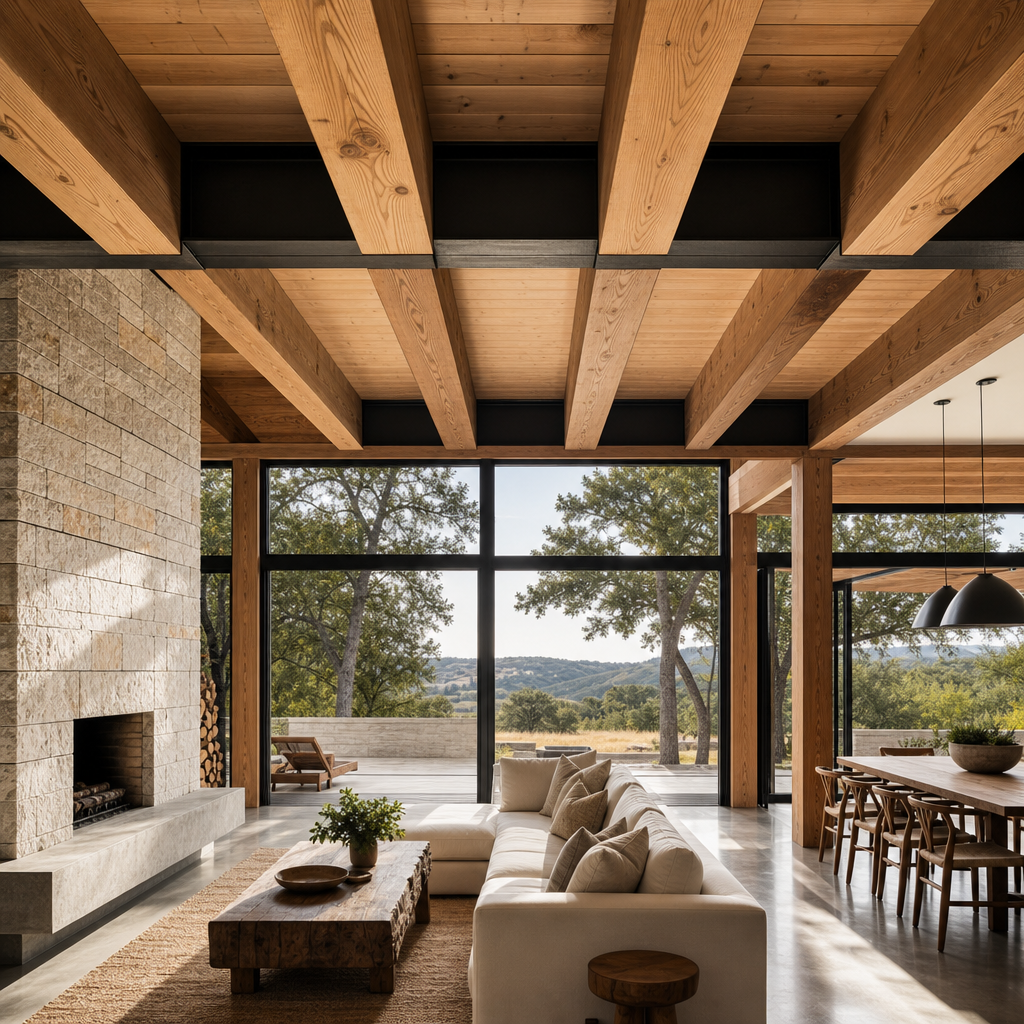
Clear Douglas fir delivers a nearly knot-free appearance, creating that minimalist, refined backdrop many contemporary designs call for. The wood reads as a solid, warm plane without visual interruption. This grade works exceptionally well when beams serve primarily as structural elements that shouldn’t demand attention.
Vertical Grain Douglas fir introduces controlled visual texture through grain alignment. The tighter, more uniform grain pattern still maintains sophistication while adding subtle dimensionality. For projects where the architects want warmth and character without the casual feel of random knots, vertical grain hits that sweet spot perfectly.
Choosing between them depends on the design’s overall character. A home emphasizing clean geometry and minimalism typically benefits from clear material. Projects celebrating natural materials and craftsmanship thrive with vertical grain’s additional visual interest. We can provide samples of both grades in your proposed beam dimensions so you can evaluate them within your actual design context.
The grain direction and color consistency options don’t stop there. We can also source Douglas fir in specialty configurations like rough-sawn finishes for more rustic contemporary applications, or fully planed and sanded for polished modern work.
Action item: Request 12-inch samples of both clear and vertical grain in your specified dimensions. Hold them at different times of day to see how light affects their appearance and character.
Sustainability and Certification for Architect-Driven Projects
Modern architectural practice increasingly requires demonstrable sustainability commitments. Our Douglas fir inventory includes FSC-certified material from responsibly managed forests, meeting the environmental standards many architects specify in their specifications and client conversations.
FSC certification provides third-party verification of sustainable forestry practices, chain-of-custody documentation, and environmental responsibility. For architects whose clients value environmental stewardship, or for projects pursuing LEED or similar certifications, FSC-certified Douglas fir becomes essential.
Beyond certification, Douglas fir itself represents a sustainable choice compared to tropical hardwoods or species that require longer rotation times. The timber grows rapidly in temperate climates, regenerates readily, and produces minimal waste in processing. Specifying domestic softwoods reduces transportation emissions while supporting North American forest management.
We maintain documentation for all certified material, providing architects with the paperwork necessary for project certifications or client reporting. This backend support frees you to specify with confidence, knowing the supply chain stands behind the material.
Our Manufacturing and Supply Capabilities
We’re not just a lumber broker. We manufacture and fabricate Douglas fir beams in-house, which means we can deliver custom specifications that commodity suppliers simply cannot match.
Need a 2×14 Douglas fir beam in 28-foot lengths? We can mill and finish it. Require clear Douglas fir with a custom edge profile? Our fabrication team executes profiles that add architectural detail without requiring on-site routing or finishing. Looking for precision finger-jointing of shorter stock into longer spans? We handle that as well, using modern adhesives that meet code requirements and maintain the wood’s natural appearance.
Our manufacturing facility also supports special finishes. Whether projects call for natural wood with protective clear sealing, hand-planed texture, or custom staining to coordinate with other materials, we produce the finished product ready for installation. This eliminates the unpredictability of on-site finishing and ensures consistency across multi-span beam applications.
For architects working with builders on tight schedules, our lead times are significantly shorter than sourcing from distant mills. We maintain active production capacity and coordinate directly with your project timeline.
Real Applications: Douglas Fir in Modern Texas Homes
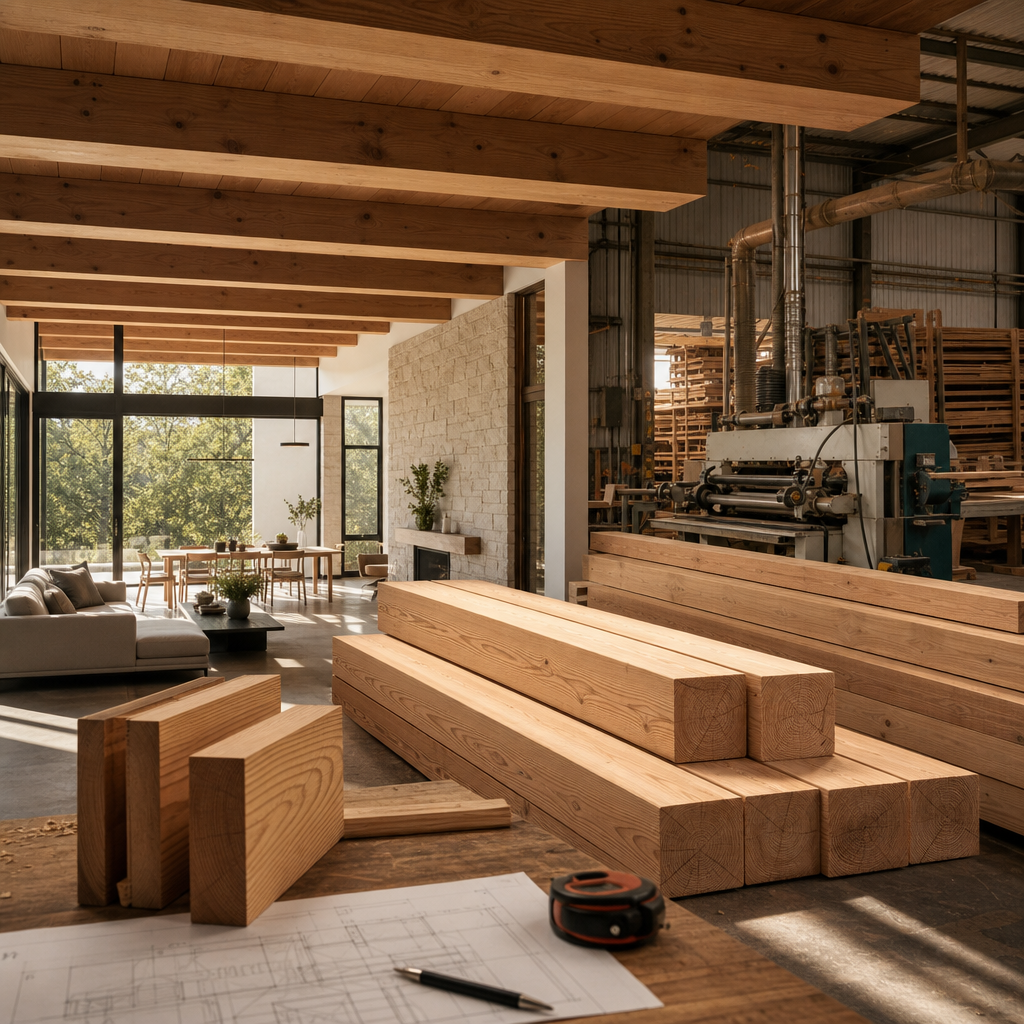
Douglas fir exposed beams have become the signature element in contemporary Texas homes from Austin Hill Country estates to Dallas modern residences. A recent project in Spicewood showcased 2×12 clear Douglas fir beams spanning a 40-foot great room, creating the visual anchor that organized the entire open floor plan. The vertical grain pattern caught morning light streaming through floor-to-ceiling glass, adding warmth without competing with the landscape views.
In an East Austin renovation, our vertical grain Douglas fir combined with expansive glass to define a covered patio that blurred indoor-outdoor boundaries. The beams’ warm tone complemented polished concrete floors and modern metal railings, creating the exact architectural balance the designer envisioned.
A Rollingwood residence used clear Douglas fir ceiling beams throughout a contemporary home, with different beam depths in different zones subtly organizing open space while maintaining visual continuity. The consistent warm tone unified the design across dining, kitchen, and living areas.
These applications share a common thread: Douglas fir’s visual and structural reliability allowed architects to make bold design moves. The material simply works, performing both functionally and aesthetically without requiring compromises.
Working with Architects on Custom Specifications
We’ve developed a streamlined process for working directly with architects during design and specification phases. Rather than waiting until construction documents are complete, early collaboration prevents costly revisions and ensures availability of materials your designs depend on.
Share your beam dimensions, grain preferences, and finish requirements early. We provide samples at full scale when helpful, allowing you to verify color, grain character, and how the material photographs in typical architectural lighting. We also discuss logistics early: lead times, delivery sequencing, and storage requirements so your builder can plan the construction schedule around material availability.
For complex applications like combined exposures (interior beams visible from exterior spaces), we coordinate material selection so the same stock works cohesively. We can also discuss modifications during construction if field conditions suggest adjustments that enhance the final product.
Our team speaks architect language. We understand structural requirements, code considerations, and design intent. This shared vocabulary eliminates miscommunication and builds efficient partnerships.
Next step: Contact us during preliminary design with your project scope, timeline, and aesthetic direction. We’ll outline feasibility and lead times before you’re locked into specifications.
WUI Compliance and Fire-Rated Solutions
Texas wildland-urban interface (WUI) zones demand fire-rated materials, and many architects assume exposed wood beams are off the table for these sensitive areas. We supply WUI Class A fire-rated Douglas fir products that maintain the aesthetic while meeting stringent building codes.
These materials undergo testing and certification to Class A fire-rating standards, allowing them for exterior siding, cladding, decking, and structural applications in WUI zones throughout Texas. The treatment process preserves the wood’s natural appearance and working characteristics, so architects specify them like conventional Douglas fir without structural complications.
For projects in Hill Country communities like Kerrville, Boerne, and areas around Horseshoe Bay where WUI compliance is mandatory, Class A-rated Douglas fir eliminates the choice between code compliance and design authenticity.
We maintain current inventory of these certified products and can advise on proper specification and installation to maintain fire ratings. Local builders and inspectors recognize these products, making permitting and construction straightforward.
Integrated Solutions Beyond the Beam
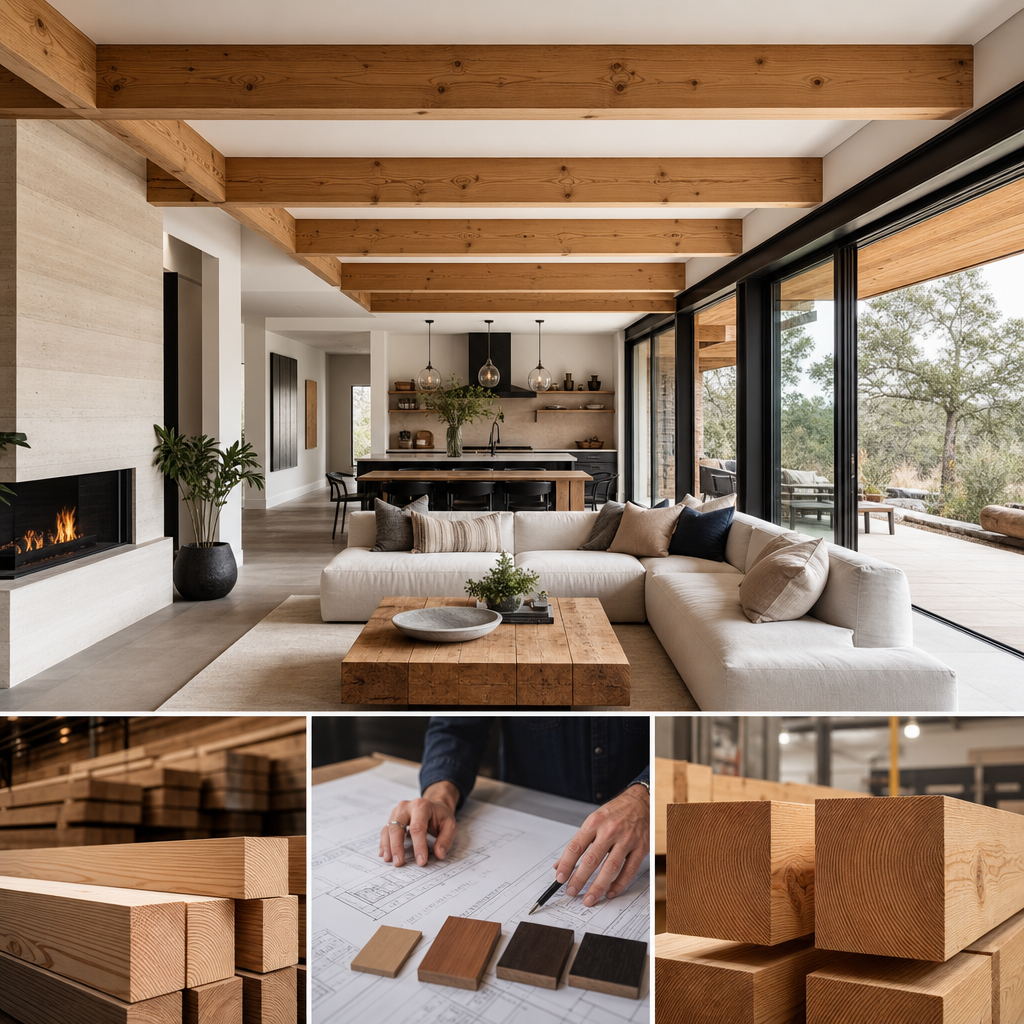
Douglas fir exposed beams often represent the visual anchor in designs that incorporate complementary materials. We supply the full palette of wood species and products that work alongside Douglas fir to create cohesive contemporary architecture.
Thermally modified wood provides durable exterior cladding and decking that complements interior beam applications. Hard-wearing tropical species like Ipe and Cumaru create deck and siding surfaces that weather gracefully while maintaining the warm wood character that defines contemporary Texas design.
Cedar and hemlock siding options coordinate seamlessly with Douglas fir beams, creating depth through subtle species and grain variation. Composite and hardwood decking choices allow architects to specify durable exterior surfaces while reserving solid wood for the architectural elements that define the design.
We stock and source all these materials in a single relationship, simplifying procurement and ensuring color and material coordination across your project.
Partner with Us for Your Next Project
Douglas fir exposed beams deserve sourcing from suppliers who understand architectural intention and deliver material that makes construction teams and architects proud. We’ve built our business on being that partner for Texas architects.
Whether you’re in Austin, Dallas, Houston, San Antonio, or anywhere in the state, we deliver premium Douglas fir and complementary materials with the expertise and reliability that modern projects demand. Our inventory, manufacturing capabilities, and direct architect relationships position us to support your vision from specification through installation.
Contact us today with your project scope and timeline. Let’s discuss how our Douglas fir solutions can become the defining element in your next contemporary Texas home.
To place orders, order samples, or talk with a live person.
Frequently Asked Questions (FAQ)
What makes your Douglas Fir exposed beams suitable for modern Texas architecture?
Our Douglas Fir timbers offer the clean lines and natural warmth that contemporary architects demand, with the structural integrity needed for dramatic cantilevers and open-concept designs. We supply both Clear and Vertical Grain options, allowing you to specify exactly the visual character your design requires. Our stock includes FSC-certified material, and we can provide thermally modified or WUI Class A fire-rated Douglas Fir when local building codes require it.
How do we handle custom beam specifications for architect-designed homes?
We work directly with your specifications from concept through delivery, whether you need non-standard dimensions, specific grain patterns, or finishes that complement your design intent. Our manufacturing capabilities allow us to deliver beams cut to your exact measurements and ready for installation, eliminating the guesswork on site. We maintain regular communication with both architects and builders to ensure material arrives exactly as specified.
Can you supply Douglas Fir beams that meet Texas fire-rating requirements?
Yes, we stock WUI Class A approved Douglas Fir products for projects in high-risk fire zones throughout Texas, including the Hill Country and surrounding regions. We can also source thermally modified alternatives that provide enhanced fire performance while maintaining the aesthetic qualities you’re after. Our team can guide you through the specification process to ensure your material selections meet both code requirements and design objectives.


