

Why Fire-Rated Fencing Matters for Austin Architects
Austin’s Wildland Urban Interface (WUI) zones create real constraints for exterior materials, and fencing is often overlooked in fire safety conversations. If your project sits in or near these zones—from the Hill Country to the urban edges of West Lake Hills and Bee Cave—your fencing specifications carry legal weight, not just aesthetic consideration.
We’ve worked with architects across Austin who initially viewed fire ratings as a limitation. What they discovered is that meeting Class A standards actually expands material possibilities rather than restricting them. Your fence can maintain the warm, expressive wood character that defines contemporary architecture while satisfying municipal codes and fire marshal requirements.
The practical benefit is straightforward: specify fire-rated materials now, and you eliminate redesign requests mid-project. You also reduce friction with city reviewers and insurance underwriters. For architects who value clean approvals and on-schedule completions, fire-rated wood fencing isn’t a compromise—it’s a specification that works.
What to do next: Review your local jurisdiction’s WUI maps and building code amendments. Most Austin-area municipalities adopted these standards between 2022 and 2024, and they apply to projects within specific distances of wildland areas.
Understanding Class A Fire Ratings and Building Codes
Class A is the highest fire-resistance rating under ASTM E84, the standard test for surface burning characteristics. It requires a flame spread rating of 0-25 and a smoke development rating of 0-450. For context, untreated wood typically scores 100-200 on the flame spread scale, so achieving Class A means the material performs comparably to inorganic substrates like concrete or mineral fiber.
Austin and surrounding jurisdictions enforce these standards through multiple pathways. The Texas Building Code (TBC) Section 701.8 mandates Class A or B exterior walls in WUI areas. Fencing requirements vary by jurisdiction—some cities require Class A for any fence within a specified distance from wildland zones, while others apply standards to specific neighborhood designations. San Antonio, Dallas, and Houston have adopted similar frameworks with local variations.
The key distinction architects must understand: a fence component can achieve Class A through material treatment, material composition, or both. A naturally fire-resistant wood species combined with thermal modification offers different advantages than chemically treated softwood. Both can meet the rating, but their maintenance, longevity, and aesthetic properties differ significantly.
Actionable insight: Request the ASTM E84 test reports from your material supplier before specifying. The test report confirms the rating and often details the specific treatment or material composition that achieves it.
Premium Wood Species That Meet Fire Ratings
Not all wood species perform equally under fire exposure. Some naturally resist flame spread due to their density and chemical composition, while others require treatment to meet Class A standards.
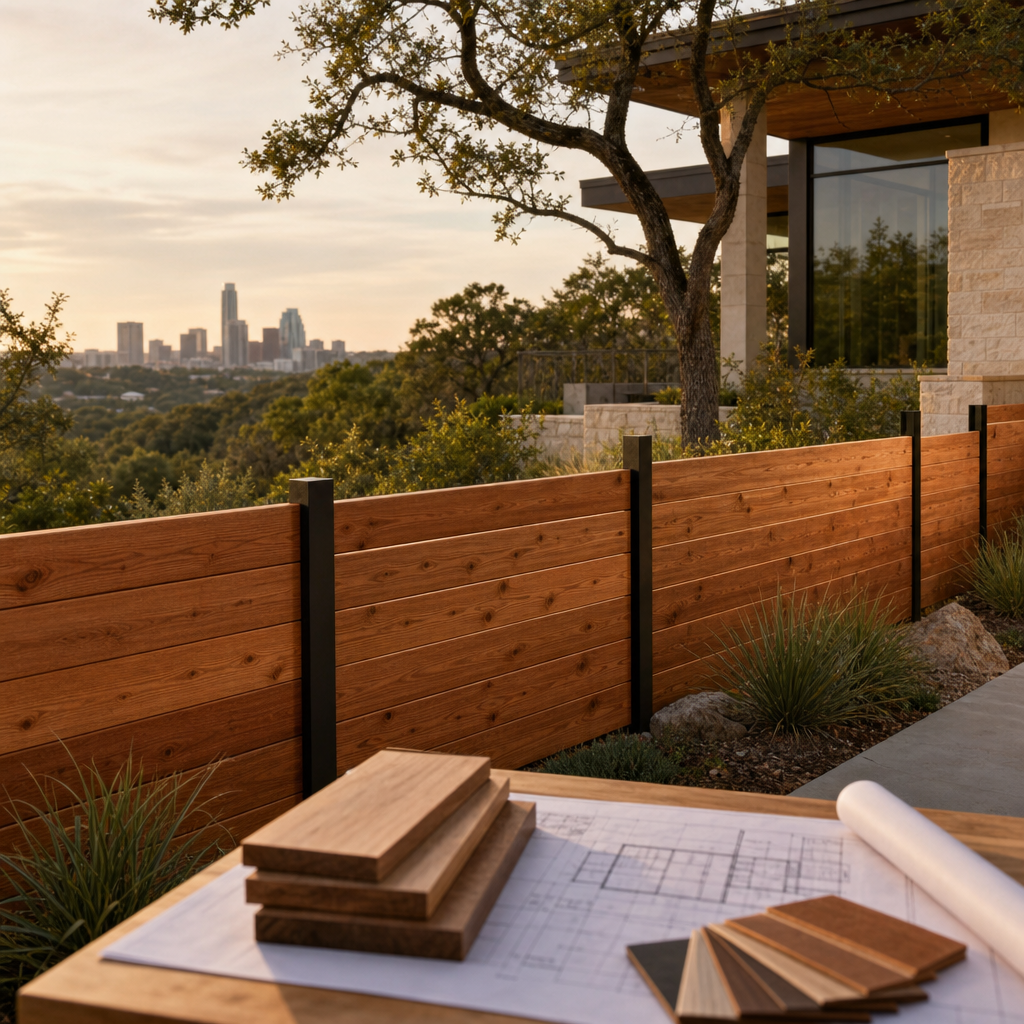
In our inventory, several hardwoods inherently perform well. Ipe is our most densely stocked option—it’s thermally stable, extremely durable in exposed conditions, and achieves Class A ratings with appropriate finishing. Cumaru and Garapa offer similar benefits with slightly less density but excellent fire performance. These species align with the warm, rich aesthetic that contemporary architects favor, and they weather beautifully in Austin’s climate without requiring stain maintenance.
For architects seeking a softer profile or lighter tone, thermally modified wood represents a compelling solution. Thermally modified ash and thermally modified pine are kiln-heated at high temperatures to alter their cellular structure, improving fire resistance without chemical additives. The process doesn’t compromise the wood’s natural appearance—in fact, thermal modification deepens color and enhances grain character. These materials are FSC-certified and align with sustainability commitments that matter to your project narrative.
Clear and vertical grain Western Red Cedar, while iconic in modern design, typically requires Class A fire-rated finishes to meet building codes. We source certified Class A coatings that preserve cedar’s distinctive appearance while delivering the fire performance your jurisdiction demands. The coating layer is thin enough to maintain wood expression, though it requires periodic maintenance.
Next step: Request finish samples for any species you’re considering. See how the Class A coating or thermal treatment affects color and texture in natural light. Many architects are surprised by how subtle these modifications appear.
How We Source and Certify Fire-Rated Materials
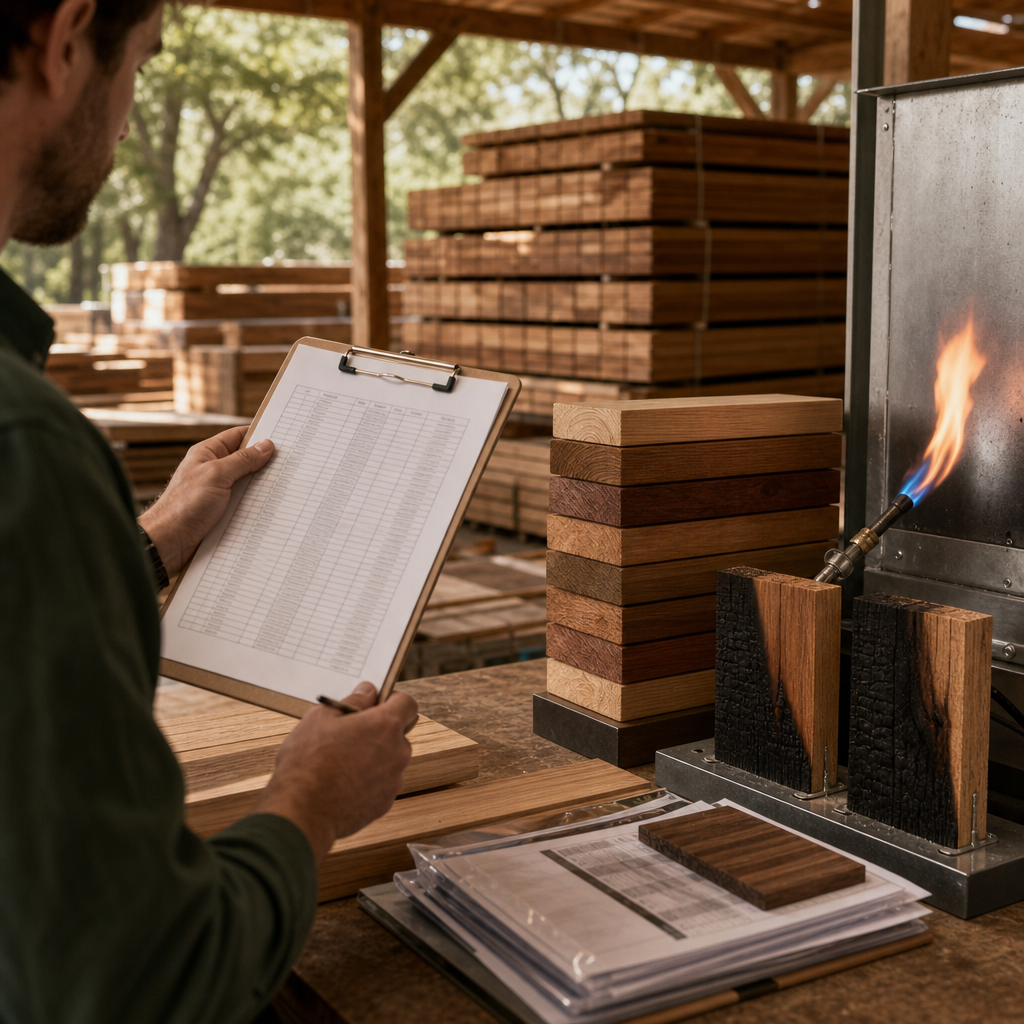
Our certification process reflects the specificity that fire ratings demand. We don’t simply stock “fire-rated wood”—we maintain detailed records of species, treatment methods, and test documentation for every product in our fire-rated inventory.
For thermally modified products, we work with manufacturers who document their kiln temperatures, hold times, and post-treatment processing. We verify FSC certification and request copies of ASTM E84 test reports conducted on the finished material in its final form. Thermal modification effectiveness can vary based on wood species and moisture content, so we confirm the exact specification your architect requires rather than assuming all thermally modified ash, for example, performs identically.
For naturally dense hardwoods like Ipe, we source from suppliers who provide third-party fire testing documentation. The species itself provides fire resistance, but the finish or any applied coatings affect the final rating. We track whether the tested rating applies to bare wood, sealed wood, or finished wood to prevent specification conflicts.
When you specify materials through our team, you receive a material specification sheet that includes the ASTM E84 test report, the wood species and origin, any treatment applied, recommended finishing, and maintenance guidance. This documentation supports your project submittal and provides the building official with clear evidence of compliance.
Actionable takeaway: Ask your material supplier for the actual test report, not just a claim that the product is “fire-rated.” The report confirms the specific test date, testing lab, and exact conditions under which the rating was achieved.
Design Excellence Without Compromising Fire Safety
Fire ratings and aesthetic ambition coexist when you approach specification thoughtfully. The warm, expressive wood character that defines contemporary architecture doesn’t evaporate because a material meets Class A standards.
Consider a horizontal slat fence in thermally modified pine. Thermal modification deepens the wood’s natural tone, creating richness without stain. The modified cellular structure resists checking and splitting, so the fence ages gracefully over years with minimal intervention. Class A performance is inherent to the material—no coating required—which means the tactile, warm wood expression remains completely authentic.
Alternatively, a vertical grain cedar fence with a Class A fire-rated clear coat delivers that iconic soft, silver-gray patina that many architects prize. The coating is transparent enough that cedar grain remains the dominant visual feature. Yes, maintenance occurs more frequently than with Ipe or thermally modified wood, but the visual payoff justifies the effort for projects where that specific aesthetic is essential.
The design principle is this: fire ratings should inform your specification process, not hijack it. Work with a supplier who can show you how different compliant materials perform visually and functionally in your specific climate and maintenance context.
Apply this immediately: Create a small comparison board with finish samples of your top three fire-rated material options. Place them in direct sunlight, under shadow, and under artificial light to see how each responds. The visual performance often reveals your best choice more clearly than specification sheets alone.
Specifying Fire-Rated Wood for Your Projects
Your specification should include several concrete elements to prevent misinterpretation on the job site.
Start with material identification: specify “thermally modified ash, kiln-treated per ISO 9000 standards” rather than just “thermally modified wood.” Note the expected color range and any finishing requirements. If you’re specifying cedar with Class A coating, name the coating manufacturer and product, then note that the coating must be reapplied per the manufacturer’s maintenance schedule—typically every 3-5 years depending on exposure.
Include the ASTM E84 rating explicitly: “Class A fire rating, ASTM E84, Flame Spread 0-25, Smoke Development 0-450, tested per [test date and lab].” This prevents assumptions and gives the general contractor and building inspector the exact standard you’re meeting.
Address dimensional and installation details. Fire ratings test the material in specific configurations—if your fencing uses unusual board dimensions or installation methods, verify that your rating applies to your exact application. We’ve seen projects where the tested rating applied to a 1×8 profile, but the fence was specified in 1×12 boards, creating ambiguity.
Finally, specify maintenance expectations. Class A coatings and thermally modified materials require different care. If your design intent includes a weathered silver-gray patina, that’s a legitimate finish choice—but it requires active maintenance to prevent the coating from failing. Conversely, if you specify bare thermally modified wood expecting minimal upkeep, that’s also valid, but the client needs to understand what “minimal” actually means in your climate.
Take action now: Draft a one-page specification sheet for your next fencing project. Include material, fire rating with test report reference, color expectations, finish specification, and maintenance interval. This becomes your communication tool with contractors and inspectors.
Working with Our Team on Your Next Project
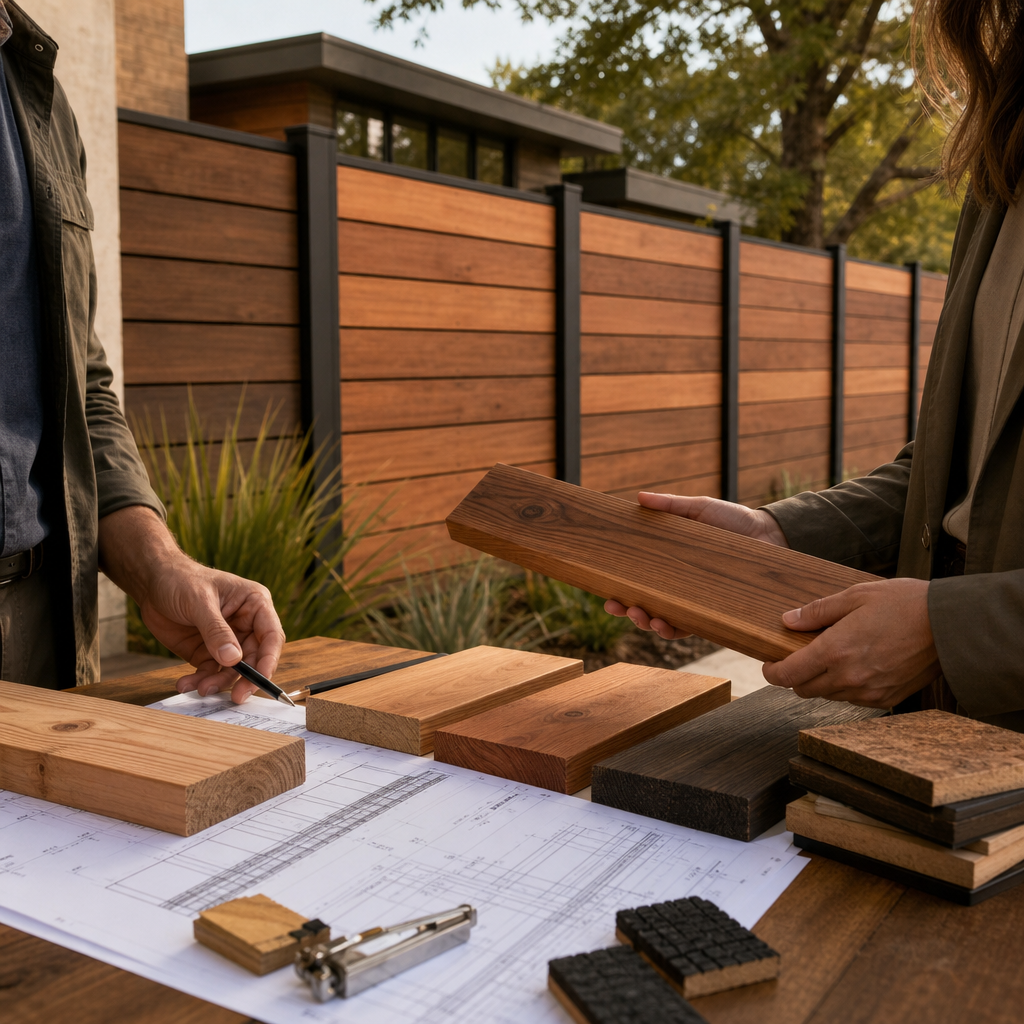
We’ve developed a streamlined specification process specifically for architects who need fire-rated fencing materials with confidence and precision. When you’re ready to specify, our team handles the documentation and material sourcing so you focus on design.
Here’s how we support your projects: First, we confirm which fire rating your specific jurisdiction requires and verify that your preferred material meets it. Second, we source finished samples showing your exact material, finish, and color so you see the final product before committing. Third, we provide complete test documentation and a specification statement you can drop directly into your project docs. Finally, when material ships to your job site, we verify that it matches the specification you approved.
We stock fire-rated hardwoods like Ipe, Cumaru, and Garapa year-round, reducing lead times for projects on aggressive schedules. We’re also authorized distributors for Tantimber wood and other thermally modified species, so we can source premium materials that align with your sustainability and aesthetic goals.
Our service area covers all of Texas, with physical inventory in Austin. Whether your project is in the Hill Country, Central Austin, or anywhere across the state, we deliver materials and support specification confidence.
Next step: Reach out with your project scope—location, preferred material profile, and timeline. We’ll confirm fire-rating requirements for your jurisdiction, source samples, and provide initial cost guidance. Our goal is to make fire-rated specification invisible to your design process, not a constraint on it.
To place orders, order samples, or talk with a live person.
Frequently Asked Questions (FAQ)
What Class A fire-rated wood species do we stock for fencing projects in Austin?
We carry several premium wood options that meet Class A fire ratings, including thermally modified ash, thermally modified pine, and our selection of softwoods like Douglas Fir and Hemlock that have been treated to achieve fire-resistant specifications. Our inventory also includes WUI Class A approved materials specifically suited for fire-prone areas around Austin and the Texas Hill Country. We can source both clear and vertical grain options depending on your design requirements and local building code specifications.
How do we ensure our fire-rated materials meet architect specifications?
We work directly with our suppliers to obtain FSC certifications and fire-rating documentation for every product we recommend for your projects. Our team verifies that materials comply with current Austin building codes and WUI requirements before we stock them, so you can specify with confidence. We provide detailed technical specifications and third-party certifications that you can include in your project documentation.
Can we customize fire-rated fencing designs without compromising performance?
Absolutely. We understand that architects like you prioritize both aesthetic expression and safety requirements, so we help integrate fire-rated materials into designs that showcase natural wood beauty and craftsmanship. Our thermally modified wood products and treated softwoods offer the warm, expressive character you want while maintaining Class A ratings. We’re happy to discuss how specific species, grain patterns, and finishing approaches work within your design vision and the fire codes that apply to each Austin-area site.


