

Why Fire-Rated Wood Decking Matters for Texas Properties
Fire-rated decking isn’t a luxury feature in Texas anymore. It’s becoming essential. As wildfire risk expands across the state and building codes tighten in high-risk zones, architects and builders need to understand what fire-rated wood decking actually delivers and why material selection matters far beyond compliance.
We work with Texas architects who refuse to compromise on aesthetics or performance. Your clients want outdoor living spaces that feel warm, authentic, and distinctly crafted. That vision doesn’t have to disappear when fire safety enters the equation. The right fire-rated wood decking maintains the visual warmth and natural character your designs demand while meeting the strictest safety standards.
Wildfire Risk Assessment Areas (WRAs) in Texas now cover regions that weren’t flagged five years ago. Hill Country properties, suburban Austin and Dallas subdivisions, and premium communities in San Antonio and surrounding areas are all facing elevated exposure. When a property sits within or near a WUA, building officials and insurance carriers increasingly require Class A fire ratings for exterior materials, including decking.
Beyond code compliance, fire-rated decking affects resale value and insurance premiums. A home with Class A exterior materials may qualify for better coverage rates and appeals to educated buyers who understand their own risk exposure. For luxury custom projects, this detail becomes a selling point rather than a checkbox.
The challenge architects face is real: standard wood decking burns readily. Without treatment or material modification, it contributes to rapid fire spread. Fire-rated alternatives exist, but many feel plasticky, synthetic, or visually inconsistent with the warm wood aesthetic your designs call for. That’s where understanding your actual options becomes critical.
Our fire-rated wood products allow you to specify authentic wood surfaces that genuinely perform under extreme heat conditions. This isn’t marketing language. These materials have been tested and verified to meet Class A specifications while delivering the visual and tactile qualities wood brings to contemporary design.
Action step: Confirm whether your project site falls within a WUA by checking Texas A&M Forest Service wildfire risk maps. This determines whether fire-rated materials are mandatory or discretionary.
Understanding WUI Class A Standards and Requirements
WUI stands for Wildland-Urban Interface. Class A is the highest fire-rating classification under ASTM E84 Tunnel Testing standards. To achieve Class A, a material must score below 25 on the Flame Spread Index and below 450 on the Smoke Development Index.
Here’s what that means practically: Class A materials resist ignition, burn slowly if they ignite at all, and produce minimal smoke. For exterior decking, this matters enormously during wildfire events when embers can land on horizontal surfaces and smoldering can begin within minutes.
Many architects assume all fire-rated wood is chemically treated with fire retardants. That’s partially true, but it’s not the complete picture. Some of our most effective solutions use thermal modification instead of chemical coatings, which changes everything about durability, appearance, and longevity.
Building departments in Texas require documentation proving your chosen material meets Class A standards. We provide full testing reports and compliance certifications with every specification. Your specification should reference the material’s ASTM E84 test results directly, not just a manufacturer’s claim.
Requirements also vary by jurisdiction. Austin has different standards than Horseshoe Bay or Kerrville, and newer Hill Country developments often impose stricter requirements than older neighborhoods. Before specifying, confirm the exact local requirements with your building official. We help architects navigate these specifics during the specification phase.
Action step: Request ASTM E84 test reports from your material supplier before specifying. If they can’t provide them, the product isn’t truly Class A rated.
Traditional Pressure-Treated vs. Our Fire-Rated Wood Solutions
Standard pressure-treated lumber uses copper-based preservatives to prevent rot and insect damage. It’s economical and durable. But it’s not fire-rated. It will burn if exposed to sufficient heat, and it doesn’t meet Class A standards in most jurisdictions.
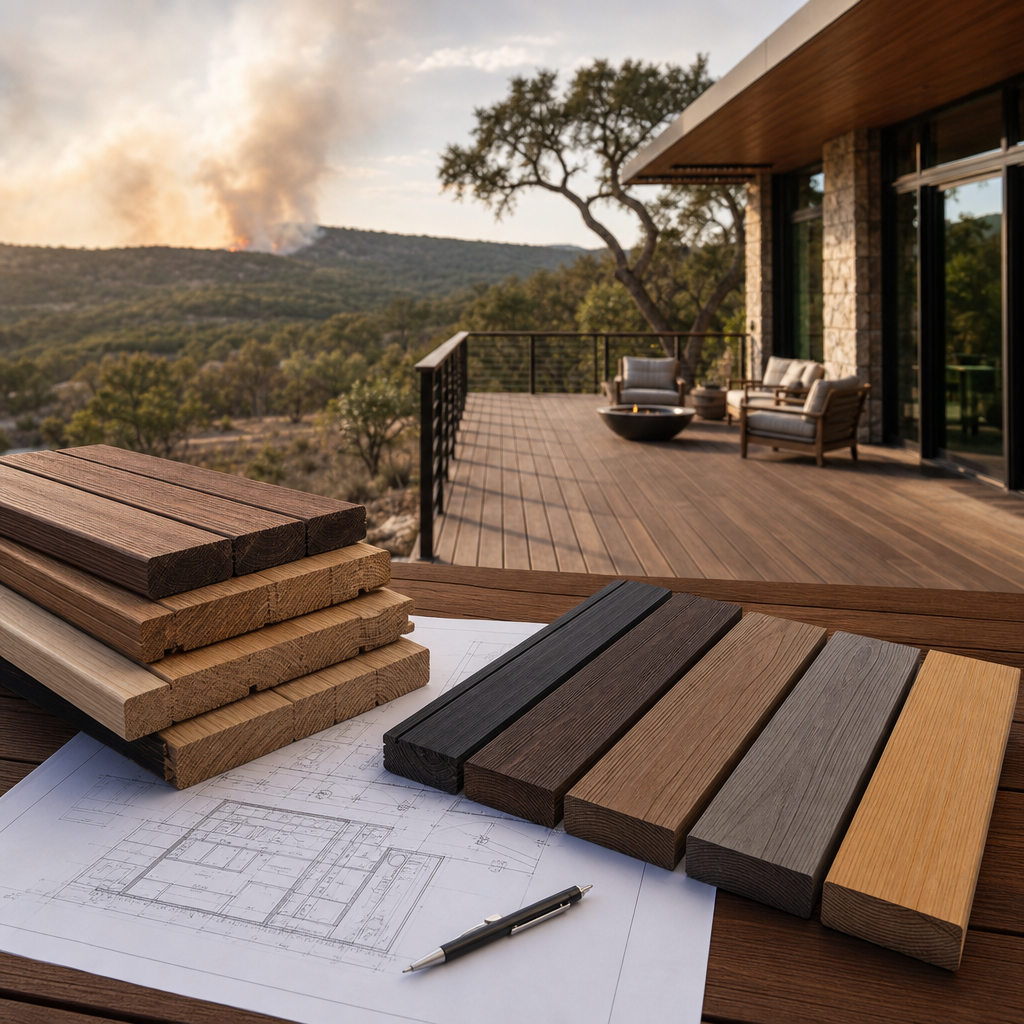
Some builders and architects treat pressure-treated wood with liquid fire retardants as a cost-cutting measure. This creates a false sense of security. These topical treatments wash away with rain, fade with UV exposure, and often leave a visible chemical residue that contradicts the warm, natural aesthetic contemporary architecture demands. After two or three years, the fire protection is effectively gone.
Our fire-rated solutions work differently. They either use pressure-treatment with fire-retardant compounds (which stay active far longer than topical applications) or they rely on thermal modification that actually changes the wood’s cell structure, making it inherently fire-resistant without surface treatments.
The visual difference is significant. Pressure-treated lumber often has a greenish or grayish cast that takes years to weather. Fire-retardant-treated lumber sometimes shows uneven coloration. Our premium Class A options, particularly the thermally modified selections, develop warm, rich patinas that deepen with age. They look like authentic wood because they are authentic wood, just modified at a material level for superior performance.
Maintenance and refinishing also differ substantially. Topically treated solutions require frequent reapplication of fire retardants. Our thermally modified decking needs no special retreatment. It weathers naturally, develops character, and maintains fire-rating throughout its lifespan without intervention.
Action step: Request physical samples of any fire-rated decking you’re considering. The visual difference between solutions is apparent when you see them side by side.
Thermally Modified Wood: Superior Performance and Durability
Thermal modification is a heat-treatment process that removes moisture and resin from wood, altering its cellular structure without chemicals. The result is wood that resists decay, resists dimensional movement, and resists fire more effectively than its unmodified counterpart.
We supply several thermally modified options that achieve Class A fire ratings: Thermally Modified Ash, Thermally Modified Pine, Thermally Modified Poplar, and Thermally Modified Ayous. Each brings distinct aesthetic qualities. Ash delivers sophisticated light-to-medium tones with fine grain character. Pine offers warmth and distinctive knot patterns. Ayous provides subtle, uniform coloration that feels contemporary and refined.
The fire-resistance comes from the material’s reduced resin content and modified cell structure. Less resin means less fuel for fire. The wood is measurably more difficult to ignite and burns more slowly. This isn’t theoretical; it’s demonstrated through ASTM testing and real-world wildfire performance studies.
Beyond fire performance, thermally modified wood excels in stability. Deck boards that stay flat and don’t cup or twist reduce callbacks and maintenance headaches. The wood resists moisture absorption, so it doesn’t swell and shrink seasonally the way conventional wood does. For architects specifying precision-fit details and clean line expression, this stability is invaluable.
Thermally modified decking also ages beautifully. It develops a sophisticated silvered patina over time, or it can be finished with penetrating stains to maintain warm tones indefinitely. Clients who want their wood decking to evolve naturally over the years love this option. Those who prefer consistent appearance can maintain color with periodic staining.
The lifecycle cost argument is compelling. Thermally modified decking costs more initially than pressure-treated options, but it requires no special fire-retardant reapplication, resists decay better, and lasts substantially longer. Over a twenty-year period, the total cost of ownership is often lower than repeatedly refinishing and retreating conventional decking.
Action step: Specify thermally modified wood when your project prioritizes durability, low maintenance, and sophisticated aging. Request samples showing both fresh and weathered finishes to confirm the aesthetic direction.
Aesthetic Advantages of Our Premium Fire-Rated Options
This is where fire-rated decking stops feeling like a compliance burden and starts feeling like a design choice.
Our hardwood options, including Ipe, Cumaru, Garapa, Massaranduba, and Tigerwood, deliver rich color and grain character that high-end contemporary architecture demands. Ipe brings deep chocolate and bronze tones. Cumaru offers warm honey and amber hues. These materials age gorgeously and develop even more visual depth over time. They’re not synthetics trying to approximate wood; they’re genuinely expressive timber.
Many of these hardwoods inherently resist fire better than softwoods. Some achieve Class A ratings naturally, while others may require mild treatment. The key is that when you specify hardwood decking for its aesthetic and performance qualities, the fire-resistance often comes as a bonus rather than a compromise.
Our softwood offerings in Clear and Vertical Grain Western Red Cedar, Yellow Cedar, Hemlock, Douglas Fir, Cypress, and Southern Yellow Pine, combined with fire-rating treatments, maintain the warm, traditional character these woods are known for. Vertical grain Douglas Fir has a clean, architectural expression that contemporary design firms appreciate. Clear Western Red Cedar brings warmth and a subtle, refined presence.
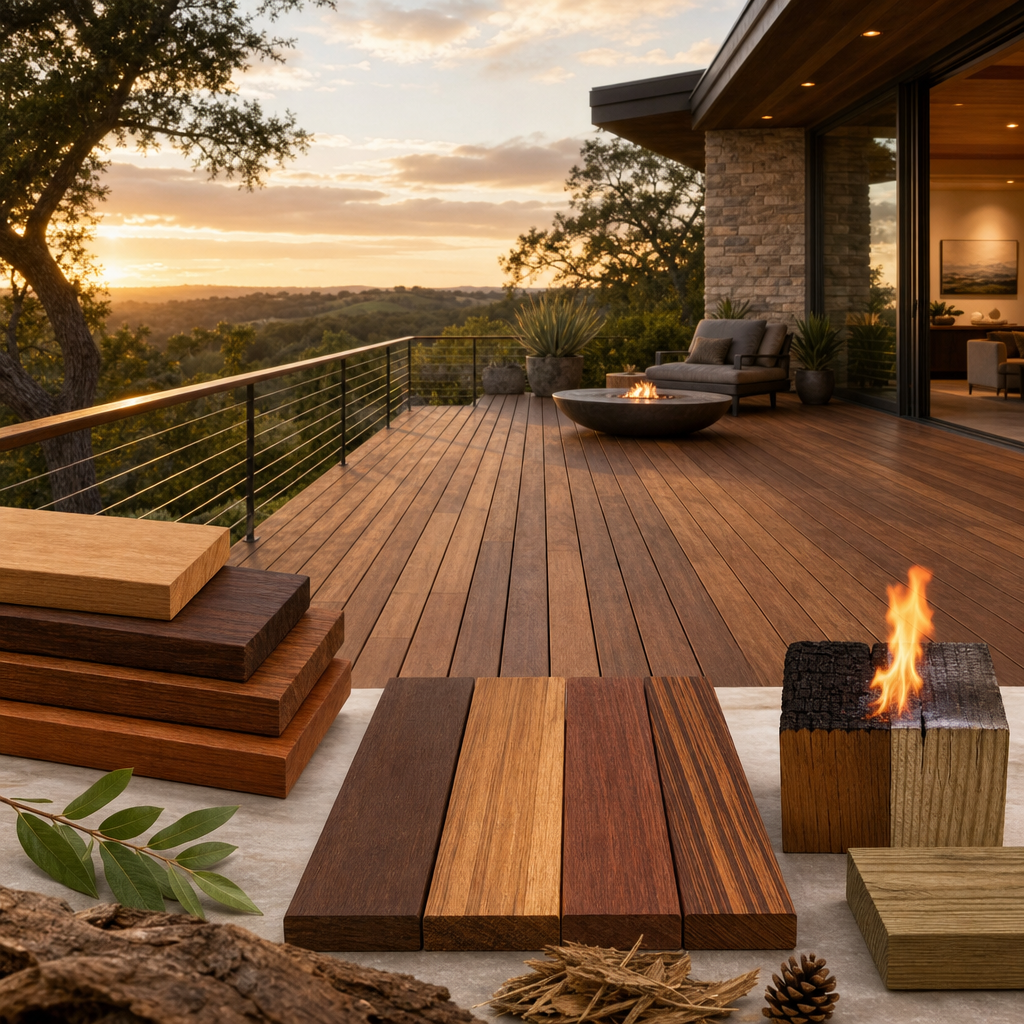
We also stock composite alternatives including TimberTech, Trex, and Fiberon products. These engineered solutions often meet or exceed Class A ratings while eliminating wood maintenance entirely. For architects designing modern minimal aesthetics with low-maintenance requirements, composites solve multiple problems simultaneously.
The aesthetic decision ultimately flows from your design intent. If your project calls for authentic natural wood with patina and character, thermally modified options or premium hardwoods deliver that without visual compromise. If the design embraces contemporary minimal aesthetics, composites excel. Either way, Class A compliance becomes integrated into the design rather than bolted on as an afterthought.
Action step: Pull visual references from completed projects using your preferred decking material in Class A rated versions. Share these with your client to confirm the aesthetic aligns with their expectations before specifying.
Our Comprehensive Fire-Rated Product Selection
We maintain inventory across the full spectrum of fire-rated decking options, eliminating the project delays that come with special-ordering materials during tight construction schedules.
Our WUI Class A approved woods include pressure-treated siding, cladding, decking, soffits, fencing, framing materials, and pickets. We stock these in Douglas Fir, Hemlock, Cedar, Cypress, and Southern Yellow Pine, all available in grades and dimensions that accommodate both standard residential and custom architectural applications.
For architects designing with character and warmth, our hardwood inventory includes Ipe decking and siding with fire-rating capabilities, plus Cumaru, Garapa, Massaranduba, and Tigerwood options. These tropical hardwoods resist decay without relying on chemical preservatives, appeal to architects prioritizing sustainability, and deliver incomparable visual expression.
Our thermally modified wood selection spans Ash, Pine, Poplar, and Ayous in decking and siding profiles. These are the materials we consistently recommend to Texas architects who want authentic wood that performs at Class A levels without the visual compromises of chemical treatment.
We’re also an approved supplier and dealer for leading brands including Arbor Wood, Tantimber, TimberTech, Trex, and Fiberon. These partnerships allow us to specify engineered solutions that meet Class A requirements while offering alternative aesthetic directions and maintenance profiles.
Many of our products carry FSC certification, meeting the sustainability expectations increasingly important to architects designing for environmentally conscious clients. Fire-rating and sustainability aren’t competing priorities with our product selection; they work together.
Action step: Meet with our team to review physical samples across categories. We’ll help narrow selections based on your specific aesthetic intent, durability requirements, and fire-rating needs.
Installation and Maintenance Considerations
Fire-rated decking performs to specification only when installed correctly. Improper installation can compromise fire-resistance and void certifications.
For chemically treated materials, fasteners must be stainless steel or hot-dipped galvanized to prevent corrosion and protect the treated surface. Flashing details must prevent water intrusion, which can compromise treatment integrity. These specifics should be called out in your construction documents explicitly.
Thermally modified wood is more forgiving from an installation perspective. It requires standard stainless steel fasteners (like any quality decking) but doesn’t need special flashing details beyond good general practice. The material’s inherent stability means fasteners hold better and callbacks for warped boards drop significantly compared to standard pressure-treated options.
Hardwoods like Ipe are denser and require pre-drilling to prevent fastener issues. This is standard practice but bears mentioning in construction specs so installers plan appropriately.
Maintenance varies dramatically by material choice. Composite decking requires virtually no maintenance. Thermally modified wood needs occasional inspection and can be left to weather naturally or maintained with periodic staining. Hardwoods benefit from regular cleaning and can be maintained or allowed to patina. Chemically treated softwoods require more frequent inspection and eventual retreat with fire-retardant solutions.
Document the expected maintenance timeline in your project specifications and client communications. This prevents surprises later and supports informed decisions during material selection.
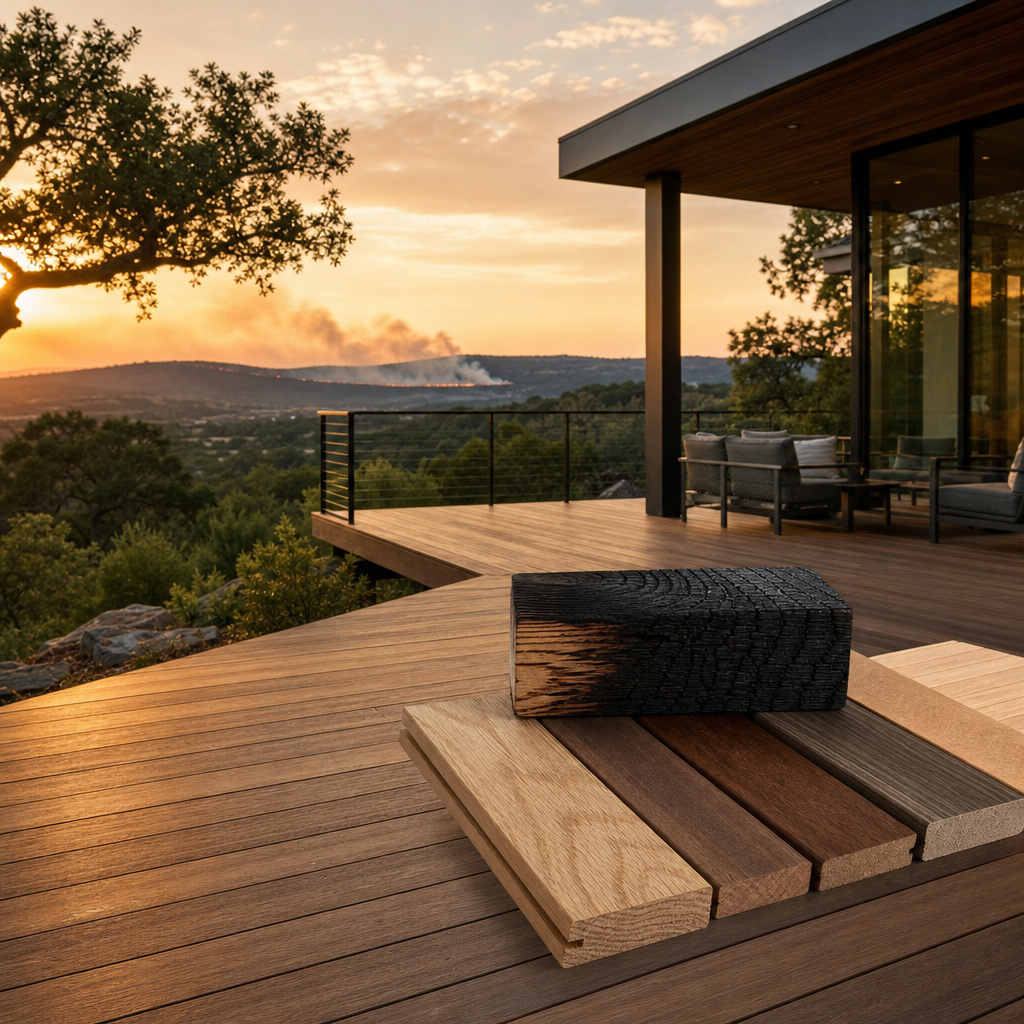
Action step: Include maintenance expectations in your specification and client materials. Clients who understand that thermally modified wood develops patina naturally are satisfied with aging. Those who expect consistent appearance should specify options requiring periodic staining.
Why US Lumber Brokers Is Your Definitive Choice for Fire-Rated Decking
We’ve built our reputation on understanding what Texas architects actually need. You’re not sourcing commodity lumber; you’re specifying materials that define the character of architect-designed homes. That’s a different conversation than standard lumber supply.
We maintain inventory depth that matters. You won’t encounter the multi-week lead times that derail construction schedules. We stock fire-rated materials across price points and aesthetic directions, meaning you can specify with confidence that materials will be available when your builder needs them.
Our product knowledge runs deep. We understand thermally modified wood at a technical level most suppliers don’t. We can articulate exactly why Thermally Modified Ash behaves differently from Thermally Modified Pine in terms of fire-resistance, dimensional stability, and aging characteristics. This depth allows us to guide you toward specifications that align perfectly with your design intent and performance requirements.
We provide complete ASTM E84 documentation and compliance certifications. You never have to wonder whether a material truly meets Class A standards. We give you the testing reports and verification your building official needs.
We’re also suppliers to architects designing with thermally modified wood across Texas, meaning we understand the specific material conversations your firm has. We speak your language about grain expression, patina development, and how materials interface with contemporary design principles.
For projects across Texas, from Austin Hill Country to San Antonio luxury developments, from Horseshoe Bay to Dallas contemporary homes, we’re positioned as your definitive source for Class A fire-rated decking that doesn’t require aesthetic compromise.
The right fire-rated wood decking feels inevitable when you specify it. It performs, it looks right, and it simplifies compliance. That’s what we deliver.
Next step: Contact us with your project specifics, preferred aesthetic direction, and timeline. We’ll review fire-rating requirements, recommend materials that align with your design vision, and provide samples so you can evaluate selections with confidence.
To place orders, order samples, or talk with a live person.
Frequently Asked Questions (FAQ)
What makes WUI Class A fire-rated wood different from standard pressure-treated decking?
We source and supply fire-rated wood products that meet stringent wildfire protection standards, whereas standard pressure-treated lumber relies solely on chemical preservation against rot and insects. Our WUI Class A materials undergo specialized thermal modification or certification processes that reduce the wood’s flammability at the material level, making them suitable for high-risk fire zones throughout Texas. We carry options like thermally modified ash and pine alongside traditional softwoods that have achieved Class A ratings, giving you performance that goes beyond what conventional treatment can provide.
Do your fire-rated decking options compromise on aesthetics or durability?
Our premium fire-rated selections actually enhance both qualities compared to standard alternatives. We stock vertical grain Western Red Cedar, Cypress, and Ipe in fire-rated configurations that maintain their natural warmth and character while delivering superior resistance to weathering and decay. Thermally modified wood options like our modified ash and pine products offer rich, distinctive color palettes that develop beautifully over time, so you’re not sacrificing the expressive material qualities that define contemporary Texas architecture.
Which of your fire-rated products work best for the Austin Hill Country region specifically?
We recommend our thermally modified wood decking and WUI Class A certified cedar options for Hill Country properties, as these materials perform exceptionally well in our local climate while meeting wildfire safety requirements for Wildland Urban Interface zones. We can also source Ipe and Cumaru hardwood decking with appropriate certifications if your design calls for maximum durability in high-traffic areas. Our team works directly with architects like those inspired by Lake|Flato to select the right combination of fire rating, aesthetics, and regional performance for each specific project.


